
blog
How to Write a Meeting Agenda in 2026
A meeting agenda is the single most effective tool for keeping a meeting on track and ensuring every attendee arrives prepared. Writing a good one takes less than 10 minutes and changes the quality of the conversation in the room. Here is a step-by-step guide with templates and examples for every meeting type.
The Five Elements of an Effective Agenda
Every effective meeting agenda contains five elements. Meeting purpose: one sentence that states the specific outcome expected. Attendees: a list of who is attending and their role in the meeting, whether as decision-maker, contributor, or observer. Agenda items: three to seven topics listed in priority order with a time allocation for each. Pre-read materials: links or attachments attendees should review before the meeting. Action items from the previous meeting: a brief review of what was committed last time and whether it was completed. Agendas that include all five elements result in meetings that start faster, stay focused, and end with clearer outcomes than agendas that list only the topics.
Step-by-Step Agenda Writing Process
Start by writing the meeting purpose in one sentence. Ask yourself: what specific decision, alignment, or output does this meeting need to produce? Then list every topic that needs to be covered to achieve that purpose. For each topic, write a single action-oriented description such as decide on Q3 launch date rather than Q3 launch. Assign a time block to each topic based on its complexity. Total the time and trim if needed by removing informational items that can be shared async. Add the pre-read link and the meeting purpose at the top. Send the agenda at least 24 hours before the meeting and ask attendees to confirm preparation.
Meeting Agenda Template for Weekly Team Sync
Here is a reusable template for weekly team meetings. Purpose: Align on priorities and resolve blockers for the week ahead. Duration: 30 minutes. Agenda item 1 - Wins and blockers (10 min): each team member shares one win from last week and one current blocker. Item 2 - Priority updates (10 min): manager shares key decisions or context the team needs. Item 3 - Action item review (5 min): review outstanding items from previous meeting. Item 4 - Open discussion (5 min): questions and topics not covered above. Pre-read: shared team status document updated before the meeting. This template can be reused every week with minimal modification and keeps the meeting under 30 minutes reliably.
Meeting Agenda Template for Project Kickoff
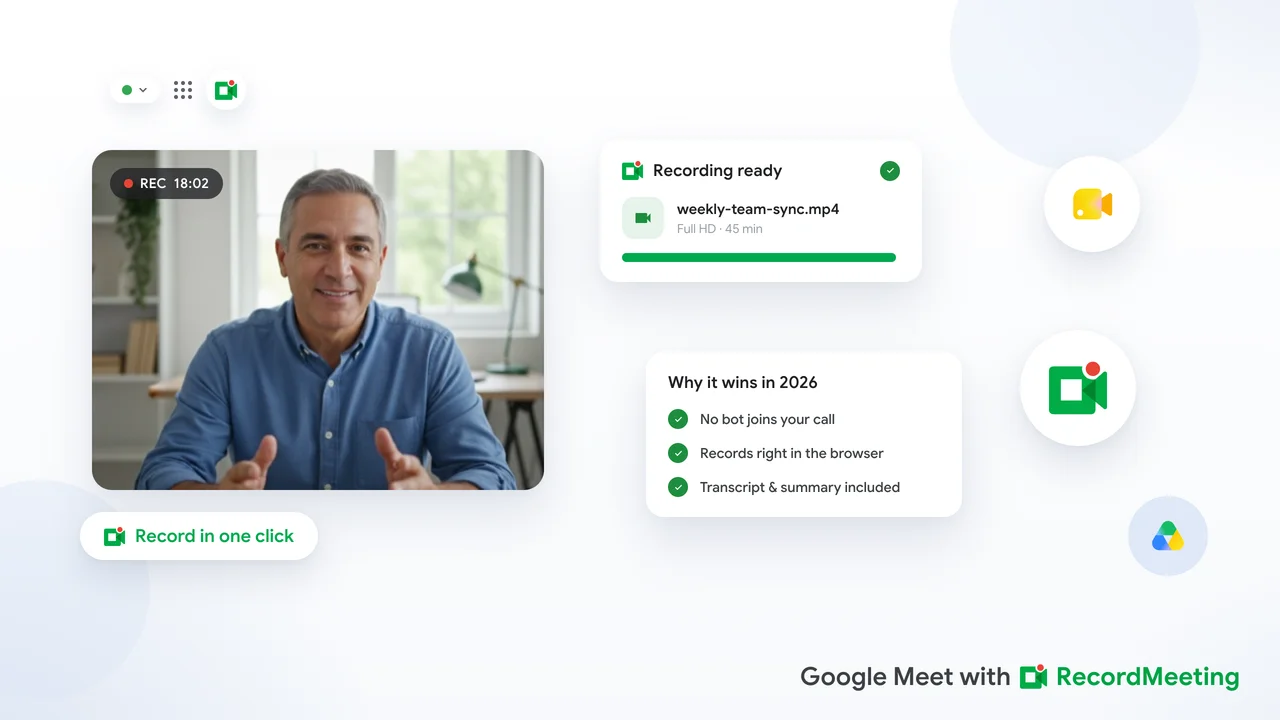
Project kickoff agendas require more detail because attendees may be meeting for the first time around a shared objective. Purpose: Align on project scope, roles, and first milestones. Duration: 60 minutes. Item 1 - Project overview (15 min): background, goals, and success criteria. Item 2 - Roles and responsibilities (10 min): who owns what and how decisions will be made. Item 3 - Scope and constraints (15 min): what is in scope and what is explicitly out of scope. Item 4 - Timeline and milestones (10 min): key dates and dependencies. Item 5 - Open questions (10 min): surface risks and unknowns before work begins. Pre-read: project brief shared 48 hours in advance. Record the kickoff with RecordMeeting so the discussion is documented for team members who join the project later.
Meeting Agenda Template for One-on-One
One-on-one meeting agendas should be co-created between the manager and the team member. Purpose: Review progress, discuss development, and remove blockers. Duration: 30 to 45 minutes. Item 1 - Team member updates (10 min): priorities from last week, what was completed, and what is carrying over. Item 2 - Blockers (10 min): anything preventing progress that requires manager input or action. Item 3 - Development discussion (10 min): one topic related to the team member's growth, skills, or career direction. Item 4 - Manager updates (5 min): context, decisions, or changes the team member needs to know. Ask the team member to bring their agenda items in advance so the manager can prepare responses and context rather than improvising.
Common Agenda Mistakes and How to Fix Them
The most common agenda mistake is listing topics without stating the desired outcome for each. A topic called marketing update can run for 40 minutes without producing a decision. The same item framed as decide on Q2 campaign budget takes 10 minutes because the outcome is clear. The second mistake is including too many items. More than seven items in a 60-minute meeting means most items will be rushed or deferred. Cut informational items and replace them with a pre-read or a recorded update. The third mistake is sending the agenda too late. An agenda sent five minutes before the meeting is decoration. Send it at least 24 hours in advance to enable preparation.
Using Recordings to Make Agendas More Accurate Over Time
Review the recording from each meeting against the original agenda. Note which items went over time, which were cut, and which produced the best discussion. Over four to six meetings, you will see consistent patterns that tell you which agenda structures work for your team and which do not. Teams that use recordings to refine their agenda templates progressively run shorter meetings with more consistent outcomes. RecordMeeting's transcript search lets you find specific moments from past meetings to reference when revising your agenda format.
Related resources
Explore more guides and features across RecordMeeting.
Try it on your next meeting
Free to get started. Install the Chrome extension and record your first call in under a minute.