How Sales Teams Use Meeting Recordings to Close More Deals
The exact ways high-performing sales teams turn call recordings into faster ramp-up, better coaching, and more closed-won revenue. Real plays you can copy this week.

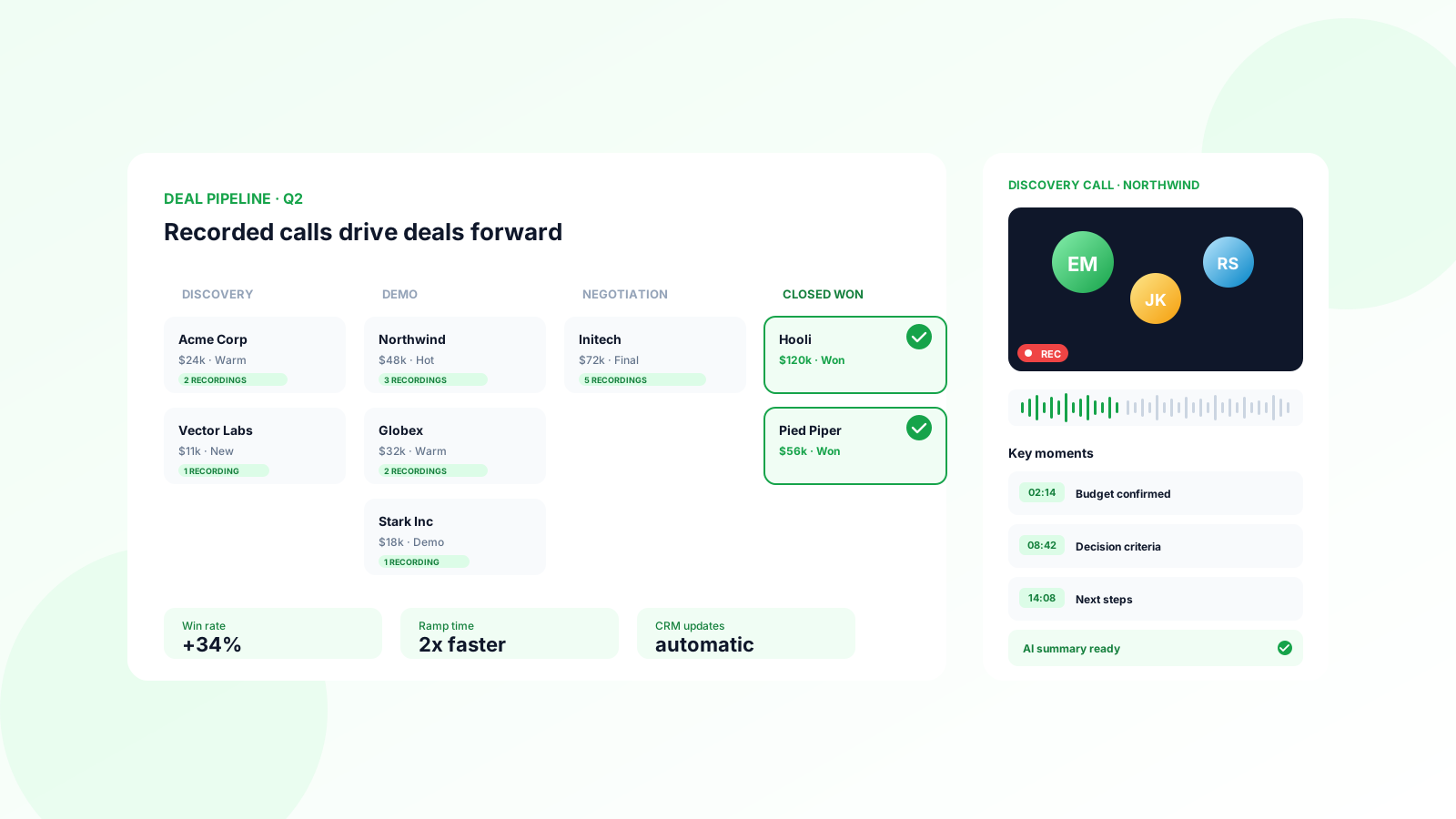
Top sales teams treat meeting recordings as a revenue asset, not a compliance artifact. They mine call libraries for objection patterns, onboard reps in half the time, and shorten deal cycles by reusing language that already worked.
This guide breaks down five specific plays sales teams run with recordings, with examples you can implement this week. No theory, just patterns from teams that have measured the impact.
The foundation of all five plays is a reliable meeting recorder that captures every sales call automatically. RecordMeeting’s use cases for sales teams covers how revenue teams set this up end-to-end.
Why Recordings Beat CRM Notes
CRM notes are a lossy summary of what happened. Recordings are the actual conversation.
That difference matters more than it sounds. A rep summarizing a 45-minute discovery call into three Salesforce bullets loses the buyer’s exact language, the moment of hesitation, the unprompted objection, and the off-script question that revealed the real budget.
Recordings preserve all of it. And once you have a library of recordings, every other sales workflow gets better.
Play 1: Cut New Rep Ramp Time in Half
The fastest way to onboard a sales rep is to let them watch winning calls before they make their own.
Build a “starter pack” library of 10 to 15 recordings new reps watch in their first week. Mix discovery, demo, objection handling, and closing calls. Pick recordings where you can hear the buyer change their mind in real time.
- 3 discovery calls (one with a perfect-fit ICP, one with a stretch deal, one that disqualified well)
- 3 demo calls (different personas: end user, manager, executive)
- 3 objection handling clips (price, competitor, timing)
- 3 closing calls (mutual close plan, asking for the verbal, navigating procurement)
- 1 lost deal post-mortem call
Teams that run this play report 30 to 50% faster ramp time. The reason is simple. Reading a battlecard tells you what to say. Watching a recording shows you when, how, and at what tone of voice.
Play 2: Build an Objection Library
Every sales team hears the same five objections every week. Most teams handle them differently every time.
Pick the five most common objections in your pipeline. For each one, find three recordings where a rep handled it well. Cut a 90-second clip showing the objection and the response. Tag it.
Now every rep on the team has a 30-second answer to “let me show you how Sarah handled that exact objection last quarter.” Pattern matching beats improvisation.
Want a deeper take on why this matters? Read our breakdown of why teams choose RecordMeeting over Otter.ai for more on building a clip library.
Play 3: Coach From Evidence, Not Memory
Most 1-on-1 coaching is theatrical. The manager asks “how did the call go,” the rep summarizes from memory, and they discuss a fictional version of what happened.
Meeting transcription with speaker labels is the prerequisite. Without a verbatim record, coaching conversations drift back into impressions.
Recordings fix that. Pick one call per week. Manager and rep both watch the same five-minute segment before the 1-on-1. Then talk about what you both heard.
Three rules make this work:
- Always pick the segment in advance. No “let me find a part” during the call.
- Watch separately, then discuss. Live commentary is performative.
- Pick wins half the time. Coaching only on losses is demoralizing and teaches nothing about replication.
Play 4: Close Faster With Recap Videos
The deal-killing dynamic in B2B sales is the buyer who has to “loop in” three more stakeholders. Each new stakeholder restarts the conversation.
The fix: send a 5-minute recording or summary of the key call to the new stakeholder before the next meeting. They walk in already aligned.
This works because video preserves nuance. A written summary loses the why. A 5-minute clip of the buyer explaining their own pain in their own words is the most persuasive thing you can put in front of a new exec.
Play 5: Share Voice-of-Customer Across the Company
Sales recordings are not just for sales. They are the highest-bandwidth source of customer truth in your company.
Product teams mine recordings for feature requests in the buyer’s exact language. That language goes into the next launch announcement.
Marketing teams pull objections and turn them into FAQ pages and comparison content.
CS teams review onboarding and renewal calls to spot churn signals early.
Set up a weekly 30-minute “voice of customer” review where one recording is shared cross-functionally. The compounding insight payoff is enormous.
What to Track
If you want to measure whether recordings are actually moving deals, track these four metrics.
| Metric | What it tells you |
|---|---|
| Ramp time to first closed deal | Library quality and onboarding efficiency |
| Win rate by recording-watched cohort | Whether reps who use the library actually close more |
| Average deal cycle length | Whether recap videos are accelerating multi-stakeholder deals |
| Objection-handled rate per rep | Whether coaching is improving real-time response |
Two quarters of data is enough to see a trend. Most teams see measurable lift on at least two of these inside 90 days.
Record every Google Meet sales call automatically. Build clip libraries, share recap videos, and coach from real evidence.
Get StartedFrequently Asked Questions
The Bottom Line
Recordings only create value when they are used. Pick one play from this list, run it for 30 days, and measure the outcome. Then add the next.
If you are still running sales without recording every call, you are leaving deal velocity on the table. For more on getting started, see our guide on how to take better meeting notes with AI.